
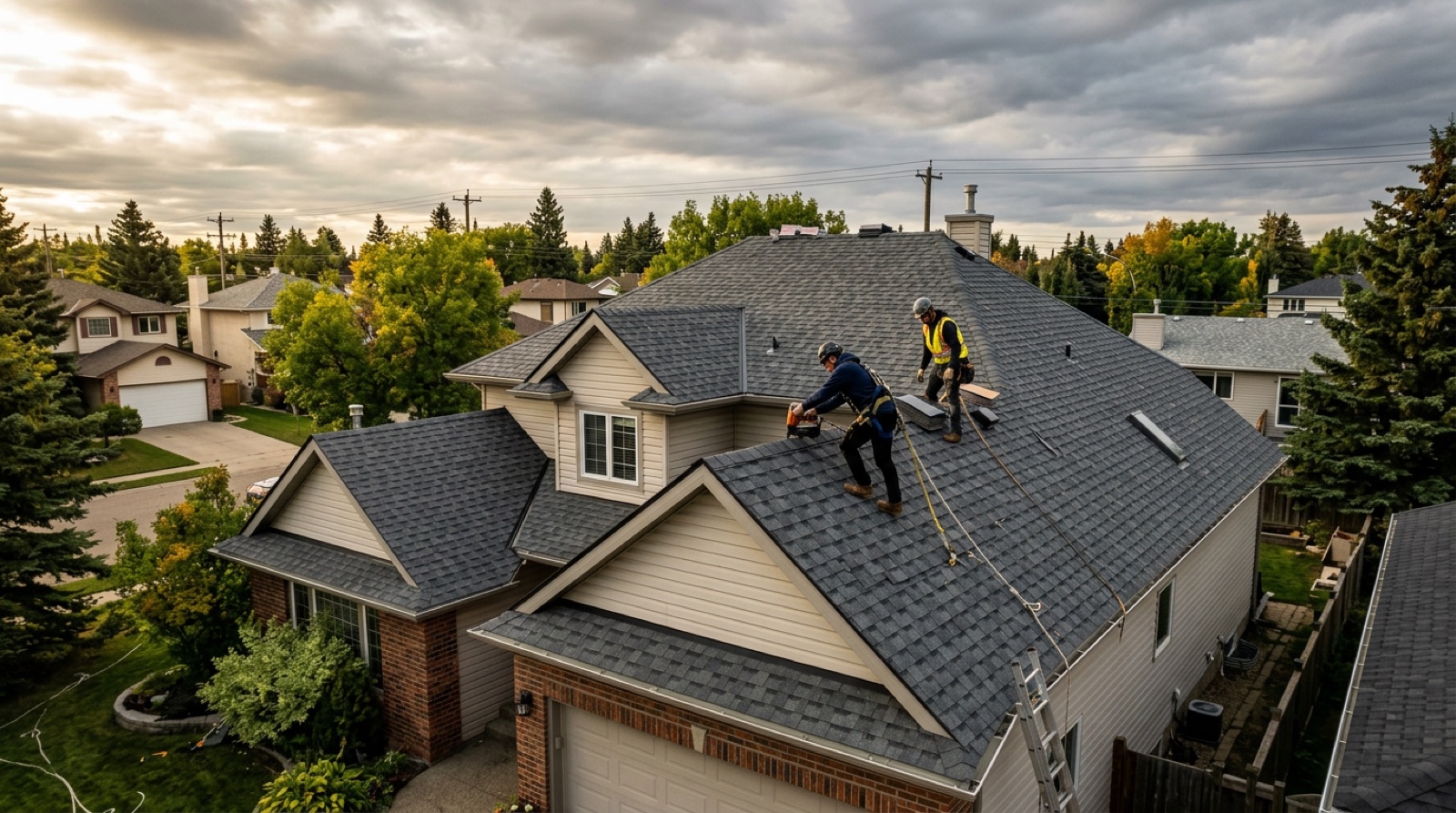
Resilience at the house level is four things
A resilient Edmonton roof does four jobs. It survives impact, it stays attached in wind, it moves water off the building fast, and it lets the attic breathe.
Fail one of those and the other three stop mattering. Almost every early roof failure we see in the Edmonton metro traces back to one specific weak point rather than a roof that was bad everywhere at once.
Why the word resilience is showing up in Edmonton this fall
The Royal Commonwealth Society of Edmonton is bringing delegates to the city from September 10 to 13, 2026 for its International Conference and Gala Dinner. The theme is "Elements and the Commonwealth: Common Ground. Collective Action."
The program covers emergency management, disaster preparedness, environmental resilience and community readiness. You can read the announcement in the coverage carried by Yahoo Finance.
Conferences operate at the policy level. Buildings operate at the level of a single fastener, and that is where a summer hailstorm or a January wind event actually gets stopped or not stopped.
The four failure points, in the order they show up
Impact
Hail does not usually punch a hole in a shingle. It bruises the mat underneath, knocks off the granules that shield the asphalt from UV, and quietly shortens the life of the roof by years.
The damage often looks like nothing from the ground for two or three seasons. If your roof took a beating in a recent cell, an inspection for hail and storm damage is worth doing while the bruising is still fresh enough to document.
Wind uplift
Edmonton gets sustained wind off open prairie and the occasional chinook push out of the southwest. Shingles come off at the edges first, because that is where uplift pressure is highest and where nailing errors are most common.
A shingle that was nailed too high, above the sealant strip, holds for a few years and then lets go. That single installation mistake causes more blow offs than any storm does.
Drainage
Water that leaves the roof slowly finds a way in. Undersized or clogged troughs back water up under the first course of shingles, and it rots the fascia from behind where nobody looks.
Getting the eavestrough, soffit and fascia system right is not cosmetic work. It is the difference between a roof that drains and a roof that ponds at the edge every spring melt.
Ventilation and ice
Warm attic air melts snow on the upper roof, that meltwater runs down and refreezes at the cold eave, and the resulting ice dam pushes water backward under the shingles. This is the single most common cause of winter ceiling stains in older Edmonton, Ellerslie and St. Albert homes.
Balanced intake at the soffit and exhaust at the ridge fixes the cause. Chipping at the ice only treats the symptom.
What is actually worth paying for at replacement time
You do not need every upgrade. You need the ones that match how your roof is most likely to fail.
| Upgrade | What it protects against | Worth it when |
|---|---|---|
| Impact rated shingles (Class 4, UL 2218) | Hail bruising and granule loss | You have had two or more hail events on the same roof |
| Standing seam metal | Impact, wind uplift, snow load | You plan to stay 25 years or more |
| Ice and water membrane at eaves and valleys | Ice dam backup | Always in Alberta, no exceptions |
| Larger troughs and added downspouts | Spring melt and heavy rain overflow | Long roof runs or a history of overflow |
| Balanced ridge and soffit ventilation | Ice dams, condensation, early shingle aging | Attic feels warm in February |
If you are weighing the covering itself, the honest comparison is upfront cost against service life. Quality asphalt shingle systems remain the sensible default for most Edmonton homes, while metal roofing earns its premium on long term ownership and shedding performance.
A short check before this winter
- Walk the perimeter and look up at the eave line for lifted, curled or missing shingles.
- Check the fascia boards for soft spots, staining or peeling paint, which usually means water has been running behind the trough.
- Look inside the attic on a cold morning for frost on the underside of the sheathing.
- Confirm your soffit vents are not blocked by insulation that got pushed into the eave.
- Clear the troughs after the leaves drop, before the first hard freeze locks debris in place.
Anything you find on that list is a small job now. Left alone through a freeze and thaw cycle, most of them become a repair with deck work attached.
Where to start
Resilience is not a product you buy. It is a set of details done correctly, from nail placement to ventilation math, and most of those details are invisible once the last shingle goes down.
That is why the installer matters more than the brand on the bundle. If you want an assessment of where your roof stands before the snow flies, get in touch for a quote and we will tell you what needs doing and what can wait.