
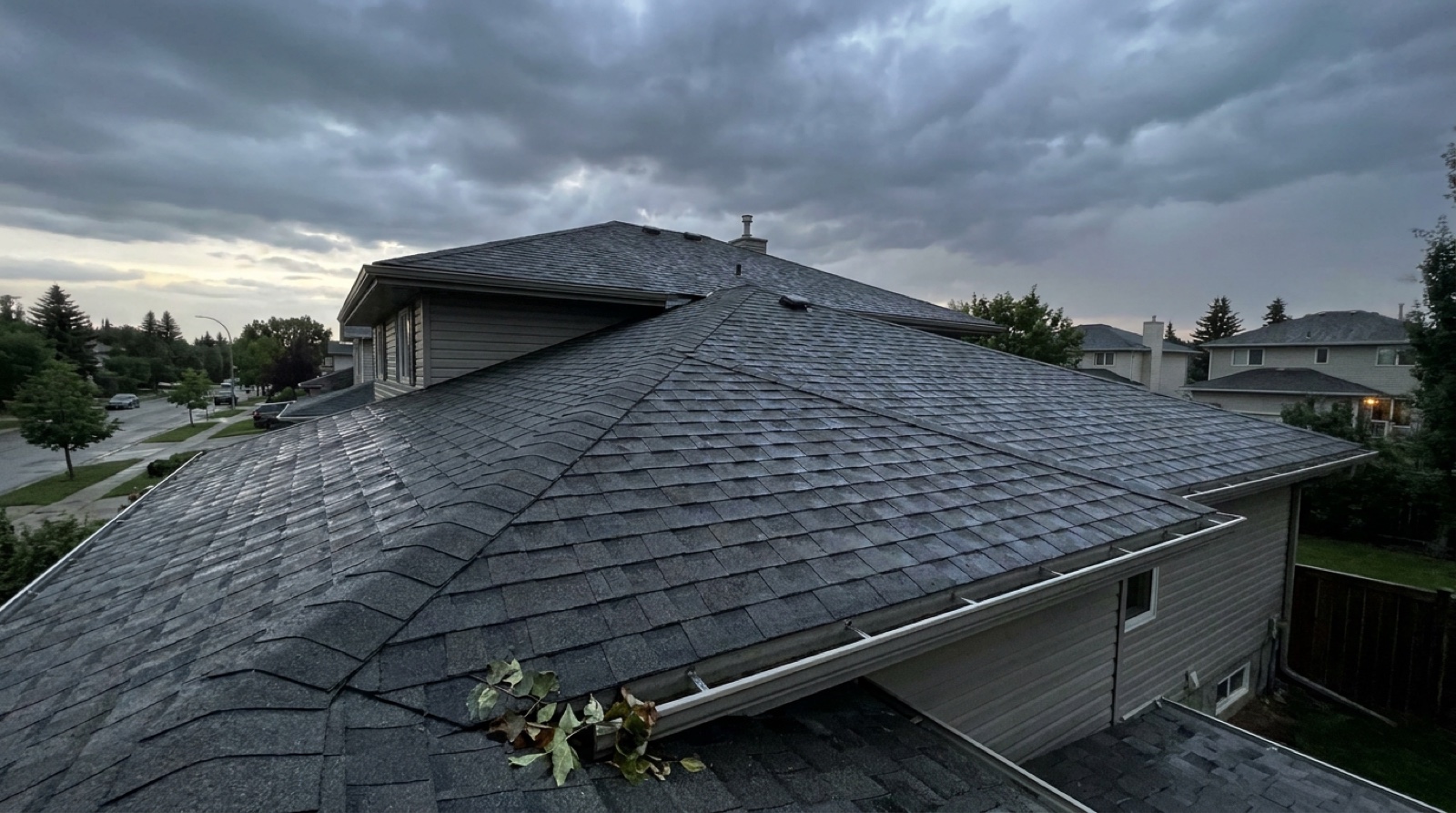
Edmonton just came through one of its wettest Junes on record, and the roofs that held up were the ones that got attention before the rain arrived.
The deluge that hit the capital region in late June pushed wastewater systems to capacity, flooded basements, and prompted water restrictions across Edmonton, St. Albert, Beaumont, and Stony Plain.
EPCOR fielded more than 600 flooding related calls in a single day. Environment Canada figures cited by CBC News put the month within reach of a rainfall record that had stood since 1914.
St. Albert alone recorded roughly 255 millimetres. When that much water falls in a short window, the roof and the drainage attached to it become the first line of defense.
Why Heavy Rain Finds the Weak Spots
A roof rarely fails during the storm you notice. It fails at the seams and penetrations that were already worn, and heavy rain finds them.
Flat and low slope commercial roofs are especially exposed. Ponding water sits on the membrane instead of draining, and every hour it sits adds weight and pressure on the seams.
Shingle roofs handle rain well until the shingles curl, lift, or lose their granules. Once that happens, wind driven rain works underneath and reaches the underlayment.
Valleys and roof to wall flashing take the most concentrated flow during a downpour. These are the spots where small gaps turn into interior leaks.
Your eavestroughs and downspouts move that water away from the house. When they clog or pull loose, water spills down the fascia and pools against the foundation, which is one of the ways basements flood.
The heaviest storms tend to expose a roof that was already near the end of its life. A slow leak becomes an active one, and a homeowner who planned to replace next year suddenly needs work now.
What to Check Now That the Rain Has Passed
If you saw water where it should not be during the June rain, walk the property while the memory is fresh. Look for staining on ceilings, damp spots along the top of exterior walls, and drip marks in the attic.
Check that downspouts still connect and discharge well away from the foundation. Clear any debris sitting in the troughs.
From the ground, scan the roof for lifted or missing shingles, especially along ridges and edges where wind lifts them first. Note anything loose around vents, chimneys, and skylights.
Signs That Need Attention Sooner Rather Than Later
- Active dripping or a wet ceiling stain that grows after rain
- Shingle granules collecting at the bottom of downspouts
- Water pooling on a flat roof more than a day after the storm
- Sagging or overflowing eavestroughs during a downpour
- Daylight or moisture visible in the attic near penetrations
Matching the Fix to What the Water Found
If you found active dripping, that is not a wait and see item. Water tracks along framing and insulation, so the stain on your ceiling is often well away from the actual entry point.
The faster you slow the intrusion, the less rot and mould you deal with later. A tarp and a same day emergency visit can save a ceiling and the drywall below it.
Once the roof is dry, the fix depends on what the water found.
| What you see | Likely fix |
|---|---|
| A few cracked or displaced shingles | Targeted repair |
| Widespread granule loss, brittle shingles | Full shingle replacement |
| Water at the roof edges, not the field | Eavestrough and fascia work |
| Ponding and seams on a flat roof | Membrane assessment |
A handful of displaced or cracked shingles is a targeted repair. This is common after a hard rain and does not always mean a full replacement.
When granule loss is widespread and the shingles are brittle, patching stops making sense. At that point a new asphalt shingle roof is the better spend because the underlying mat has aged out.
Homeowners tired of storm after storm sometimes switch materials. A standing seam metal roof sheds water fast and holds up to Alberta wind and hail, which is why more Edmonton properties are moving to it.
If the water came in around the perimeter rather than the field of the roof, the drainage is usually the culprit. Repairing or resizing the trough and fascia system often matters more than the shingles themselves.
On commercial and low slope buildings, ponding and seam failure call for a different approach than a house. A proper flat roof assessment looks at drains, membrane condition, and where the water actually pools.
Edmonton Weather Does Not Wait
June was a reminder that our weather does not pick a convenient time. The same systems that dropped a month of rain in days will be back, and the roofs that stay dry are the ones inspected and repaired between storms.
If you are not sure what your roof needs after this stretch of weather, have it looked at before the next front rolls through. A short inspection now is cheaper than an emergency in the middle of the next downpour.
Reach out for an honest assessment and a clear quote, and we will tell you whether you are looking at a small repair or something larger.